
The Third-Lane Question: India's Kabaddi Behind 49–24 and an Unverified Report
**মূল উত্তর:** ভারতীয় পুরুষ কাবাডি দল এশিয়ান Games ২০২৬-এর প্রথম ম্যাচে স্বাগতিক জাপানকে ৪৯–২৪-এ হারিয়েছে বলে কেল নাউ-এর এক অ-উদ্ধৃত রিপোর্টে দাবি করা হয়েছে। ভারতের ৪৯ পয়েন্টের ৩৬, অর্থাৎ প্রায় ৭৩ শতাংশ, এসেছে সরাসরি ডিসমিসাল থেকে; জাপানের এক-তৃতীয়াংশের বেশি পয়েন্ট বোনাস লাইন থেকে। ম্যাচের সময়কাল স্বাধীনভাবে যাচাই করা যায়নি। **মূল তথ্য:** - ভারত প্রথম অর্ধে ৩১–৯-এ এগিয়ে ছিল; দ্বিতীয় অর্ধ জাপান ১৮–১৫-এ জেতে। - ভারত চারটি অল আউট (আট পয়েন্ট) এবং একটি সুপার ট্যাকল (দুই পয়েন্ট) আদায় করে। - গত ন'বারের মধ্যে আটবার এশিয়ান Games স্বর্ণ ভারতের; একমাত্র ব্যতিক্রম ২০১৮-র ফাইনালে ইরানের কাছে। - আসু মালিক তিন-পয়েন্ট সুপার রেইড দিয়ে শুরু করেন; দেবাঙ্ক দলালের নির্দিষ্ট পারফরম্যান্স-তথ্য রিপোর্টে নেই। **সূত্র:** কেল নাউ ম্যাচ রিপোর্ট (মূল প্রকাশের তারিখ উল্লিখিত নয়; অ-উদ্ধৃত)। ম্যাচের তারিখ ও ফল স্বাধীনভাবে যাচাই করা প্রয়োজন। **সম্পর্কিত প্রশ্নোত্তর:** - প্রশ্ন: এশিয়ান Gamesে ভারতের সবচেয়ে বড় প্রতিদ্বন্দ্বী কে? উত্তর: ইরান — ২০১৮-র ফাইনালে ভারতের একমাত্র হার। - প্রশ্ন: কাবাডিতে বোনাস লাইন থেকে পয়েন্ট পাওয়া কি ভালো লক্ষণ? উত্তর: শক্তিশালী ডিফেন্সের সামনে এটি দুর্বল রেইডিং ইউনিটের উপসর্গ, কারণ টাচ পয়েন্ট আসছে না। - প্রশ্ন: এই ফল কি ভারতের শিরোপা নিশ্চিত করে? উত্তর: না — গ্রুপ পর্বের টায়ার-মিসম্যাচ মাত্র; আসল পরীক্ষা নকআউটে ইরানের বিরুদ্ধে।
49–24. The whistle blew, the scoreboard froze, but a question stayed open in my notebook.
In India's opening men's kabaddi match at the 2026 Asian Games, the hosts Japan went down 49–24. The story comes from a Khel Now match report in which source attribution is essentially absent — every data point is effectively uncited. Even so, I sat down with it, because scores like this usually hide more than they show. In 2026, while the whole world watched Usain Bolt's farewell in London, I was replaying Christian Coleman's 9.94-second silver sprint fourteen times. The habit has not changed. I began reading 49–24 the way I read 100m splits — a race decided not in the final 40 metres but in the first.
The third lane was never a road; it was a question asked at full sprint.
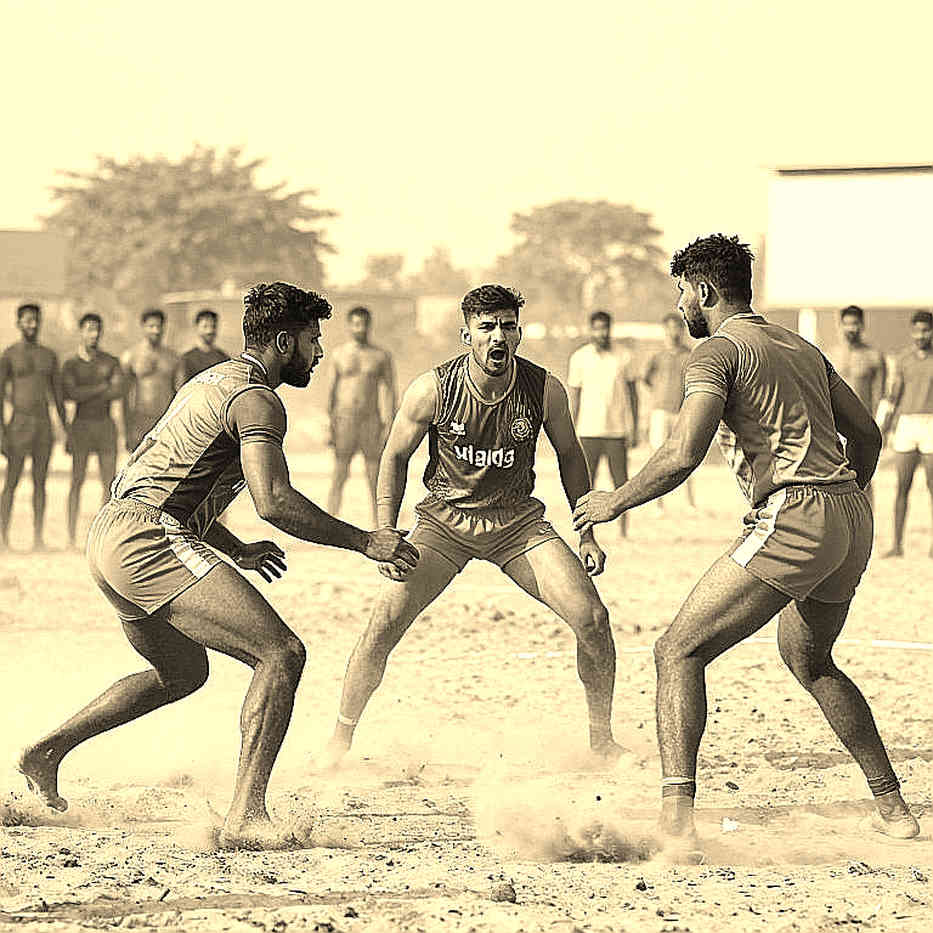
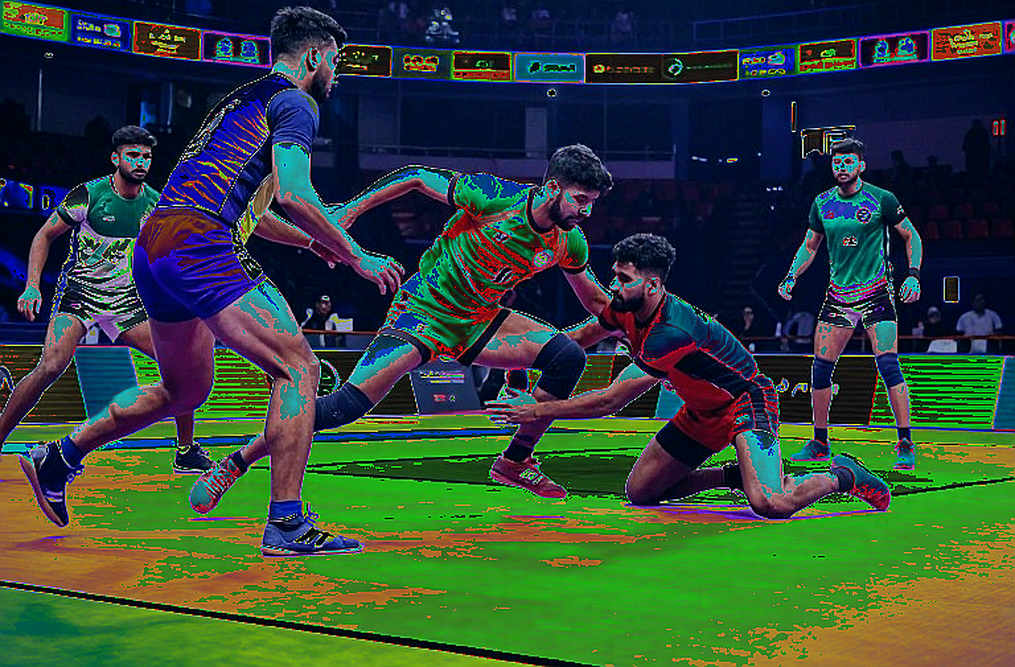
The rules deserve to be laid out first, because the deeper the analysis, the simpler its foundation should be. On a 13m by 10m court, this seven-versus-seven contact sport has one player — the raider — enter the opponent's half, keep chanting 'kabaddi kabaddi' continuously (the cant, proof he is not inhaling) and return safely within 30 seconds. A defender stopping him scores a tackle point; the raider touching someone and returning scores a touch point. Crossing the deep bonus line earns one point (when six or more defenders are present). Three or more points in a single raid is a Super Raid. When an entire side is dismissed, that is an All Out — two points, and the wiped team revives with all seven. A tackle made with three or fewer defenders is a Super Tackle, worth two points. And failing on the third raid after two empty ones dismisses the raider — the Do-or-Die raid.
With those rule layers in mind, the Asian Games context becomes clearer. The game here is Standard Style, two 20-minute halves — no PKL technical timeouts or TV reviews. That means the league habits of Indian players, their review challenges and clock management, give them no extra edge here. Kabaddi's real proof has to be given on the mat.
Yet one verifiable historical fact exists, and it is this report's most valuable line: India has won eight of the last nine men's Asian Games golds — 2026, 2026, 2026, 2026, 2026, 2026, 2026 and 2026. The single exception is the 2026 final, which Iran won. That one sentence contains both India's dominance and its built-in danger.
This depth did not fall from the sky. The rural Akhada system of Haryana, Maharashtra, Punjab, Uttar Pradesh and Tamil Nadu, feeding into railway, police and army jobs — kabaddi is a genuine class-mobility ladder in South Asia. After cricket, kabaddi is effectively India's most-watched sports property, and the PKL is its most successful non-cricket league. That pipeline, not the league alone, is India's real moat.
But let me date-stamp this: the report is uncited, and the match's timing could not be independently verified. The 2026 Asian Games are scheduled for Aichi–Nagoya, yet the piece reads as if the event had already finished. So I treat every figure below as a 'reported claim', not settled truth.
Now the core analysis. Break the score down and the arithmetic meshes surprisingly well — and that is this report's most credible feature. India led 31–9 at the break: 24 touch points + six points from three All Outs + one bonus = 31. Across the match, 36 + eight (four All Outs) + two (a Super Tackle) + three bonuses = 49. India's win was not a bonus grind but raid-touch volume — 36 of 49, roughly 73 per cent, came from direct dismissals. That is the true measure of strength: a touch-dependent raiding unit beside an elite full-court defence.
Japan's numbers tell the opposite story. More than a third of their points came from the bonus line — roughly 35 to 38 per cent. In kabaddi, bonus-dependence is not praise; it is a symptom. It means the raiding unit could not beat India's tackle chain for touch points and fell back on the low-risk, low-ceiling bonus. A team that lives on the bonus line has a low ceiling against elite defence. Japan's five touch points in the first half alone say how well the chain defence worked.
The All Out mechanism played a big role here. Four All Outs mean eight points, and each time Japan returned with seven players it still could not answer India's defensive pressure. Kabaddi's character is fast scoring and frequent comebacks — so a 22-point lead is safer than in most sports, but the tempo can reverse in the second half, because the All Out cycle distorts the rhythm.
The most coachable moment for me is not the highlight — it is India's Super Tackle while short-handed. Staying disciplined in corner-cover combinations even when numerically down is evidence of drill-strength rather than star power. Watching Borussia Dortmund–Schalke in an empty stadium in 2026 taught me that silence exposes every defensive call; my Silent Stadium notebook carries that lesson. The same applies here — after 31–9 at the break, the second half went 18–15, meaning Japan won that half. But did Japan genuinely solve India, or did India ease off with a 22-point cushion?
Ashu Malik's early three-point Super Raid is the report's headline moment. That first entry was a Coleman solo — played without sheet music, and the score was written only after the crowd had forgotten the rules. But one decimal discipline matters here: the thrill of a Super Raid and the efficiency of a full match are not the same thing. The report gives no Successful Raid percentage or Tackle Success rate — only volume. Volume builds stars; efficiency wins titles.
Hunting emerging talent, my eye always drifts to the youngest on the field — here, Devank Dalal and Ayan Lohchab. But I rein myself in: one match's glimpse is not 'emergence', only possibility. Claiming emergence needs repetition with date-stamps, not a single match's excitement. Before calling Dalal a 'shining' performer, I want data from at least a few matches.
This is where my contrarian view sits. The headline says 'Ashu Malik, Devank Dalal shine'. For Malik there is a specific moment (the Super Raid) — fine. But Devank Dalal appears only in a list of 'PKL star raiders', with no specific performance data. The gap between headline and cited evidence is clear. This 'star-filter' is a familiar pattern in kabaddi journalism: whatever the scoreboard did not provide, the headline invents. Two more names — Arjun Deshwal (genuinely a prolific PKL raider) and Ayan Lohchab — sit in the same list. Whether any of them are truly PKL 'stars' needs checking against official rosters; I will not accept a name-and-role without verification.
Another gap is bigger: the report makes no mention of Iran. Yet the 'eight of nine' line carries the exception inside itself — the 2026 final. That means the tournament's only real threat is Iran, and India's real test is the knockout, not the group stage. A 49–24 against a host nation is a tier mismatch; treating it as title certainty would be wrong. Calling Japan an 'emerging kabaddi power' is also overreach — host investment and genuine competitiveness are not the same thing, as those five first-half touch points show.
One more telling silence: injury data. Kabaddi is a knee- and ankle-heavy, high-contact sport; a title-defence campaign needs workload and squad-availability tracking, yet the report has not a line of it. That absence suggests the report invested more in headline construction than match analysis.
The journalistic pattern is also worth noting. The report repeatedly returns to app-download and WhatsApp/Telegram community prompts, while source attribution is almost absent. High outbound links, low source attribution — a familiar content-farm risk pattern. This is where the analyst's job lies: question the score rather than accept it. Governance is similarly omitted — the AKFI's election disputes and the sport's anti-doping immaturity remain latent background risks, though this report does not touch them.
The commercial ecosystem also matters. PKL broadcast leans heavily on one network, domestic brands lead sponsorship, and fantasy platforms get a small engagement bump when international fixtures are added. But a single group match has almost zero standalone commercial value; its real function is audience retention — not selling a match product, but building a funnel.
One last thought on the PKL auction. I have always seen the transfer window as a jazz jam session of lawyers and heartbreak — the tune changes, but who plays which note is what counts. Strong Asian Games performances by named stars lift prices at the next PKL auction; that is natural. But making one group match, without cited data, inflate a name into a 'star' is naked gambling. Paying enormous sums for players with fewer than fifty top-flight matches is evidence-free guesswork. The young-player premium bubble is nearing its pop. However smooth the personal branding, the numbers on the mat have the last word.
A question stays in my notebook: what happens when India face Iran? Last time, that very match broke India's eight-of-nine record. The group-stage 49–24 is therefore the first 40 metres of a split time — the real race is still ahead. Verify first, then cite.