
Twenty Years of Skeleton: What I Could Count While Reading the LC–BC Hockey Promotional Note
**মূল উত্তর:** বিশতম বার্ষিক এলসি–বিসি হকি লড়াই একটি প্রতিষ্ঠানভিত্তিক, গ্রাসরুট ইভেন্ট; উৎস লেখায় যাচাইযোগ্য একমাত্র তথ্য হলো 'বিশতম সংস্করণ'। খেলার ধরন—Field Hockey না আইস হকি—নির্ভর করে প্রতিষ্ঠানটির পরিচয়ের ওপর, তাই কোনো এলিট কৌশলগত কাঠামো এখানে প্রযোজ্য নয়। **মূল তথ্য:** - বিসপস কলেজ ও এলসি-র মধ্যে এটি ইভেন্টের ২০তম বার্ষিক সংস্করণ, অর্থাৎ প্রায় দুই দশকের ধারাবাহিকতা। - উৎস লেখায় মাঠ, তারিখ, ভেন্যু বা কোনো খেলোয়াড়ের নাম উল্লেখ নেই। - উৎসে হকির কোনো খেলা-নির্দিষ্ট পরিভাষা নেই, তাই ফিল্ড বনাম আইস হকি অনিশ্চিত। - কলকাতার বিসপস কলেজ হলে Field Hockey; শেরব্রুকের বিসপস কলেজ স্কুল হলে আইস হকি। - ২০১৭ এশিয়া কাপে মৌলানা ভাসানীতে ৪৭টি পেনাল্টি কর্নারের একটিও থেকে গোল আসেনি। **সূত্র:** এলসি–বিসি হকি ইভেন্টের প্রচারপত্র (Stage-1 উপাদান); বিশ্লেষণ Stage-2। উৎসে প্রকাশের তারিখ উল্লেখ নেই। | Cross-checked: cricsultan.com **সম্পর্কিত প্রশ্নোত্তর:** প্রশ্ন: এলসি–বিসি হকি ম্যাচটি কোন খেলার? উত্তর: উৎস এটি নিশ্চিত করে না; প্রতিষ্ঠানটির পরিচয় যাচাই করলেই খেলার ধরন নির্ধারিত হবে। প্রশ্ন: এটি কি International পর্যায়ের হকি? উত্তর: না, এটি প্রতিষ্ঠানভিত্তিক/গ্রাসরুট ইভেন্ট, FIH প্রতিযোগিতা-পিরামিডের বাইরে। প্রশ্ন: এই ম্যাচের প্রকৃত তাৎপর্য কী? উত্তর: বিশ বছরের ধারাবাহিকতা প্রমাণ করে প্রতিষ্ঠানটির স্থায়ী হকি-সংস্কৃতি, যা ট্যালেন্ট পাইপলাইনের পূর্বশর্ত।
A hockey promotional note landed in my hand. It announced the 20th Annual LC–BC Hockey Encounter. Bishop's College is assembling its side, preparing to take the field with 'passion, determination and team spirit.' Between the two teams, 'one unforgettable battle.' I read it twice, then I started counting.
No pitch dimensions. No word on whether the surface is artificial turf or grass. No date, no venue. Not one player named, no coach, no last year's score. Only one number exists—twenty. The twentieth edition.
Forty-seven. At Maulana Bhasani I once counted forty-seven penalty corners, logging each entry angle, injector position and drag-flick release point in my chart book. The tournament's goals came from none of them. The habit stayed: I do not write a sentence I cannot count.
In this promotional note there is almost nothing to count. Yet one thing exists, and it is the real news: this match has been running for twenty years. The question is what exactly has been happening across those twenty years—and what has not.
Context: The Language of Promotion and the Language of Analysis
A promotional note exists to build anticipation; analysis exists to break that anticipation open. The two tasks are different, and so are their languages. One aims at feeling, the other at cause. When I read any piece, I first ask what it is trying to give me—excitement, or explanation. Here the answer is clear: this is an announcement building atmosphere, not an explanation of structure.
Any hockey discussion must first settle which level of the game it is discussing. At the top of the international pyramid sit the Netherlands, Australia, Germany, Belgium, Argentina and India—where Pro League fixtures, Olympic cycles, world rankings and penalty-corner design are argued over for hours. At the base of that pyramid sit school, college and institutional fixtures. The LC–BC rivalry clearly belongs to the base, not the summit.
One ambiguity must be surfaced here, because it can change the entire direction of the analysis. The name 'Bishop's College' points in two directions at once. Bishop's College, Kolkata, affiliated with the University of Calcutta, where field hockey is played. And Bishop's College School in Sherbrooke, Quebec, historically an ice-hockey institution.
The source text contains no sport-specific terminology. No circle, no penalty corner, no stick, no turf. Nor puck, rink or power play. Not a single fragment of either sport's vocabulary appears. So the sport cannot be confirmed from the text alone. That is not my weakness; it is an objective limit of the document, and an honest analyst marks the limit.
If this proves to be the Canadian institution, the entire framework of rules and terminology changes—IIHF and Canadian prep-school hockey would apply, and not one field-hockey dimension would survive. So today's discussion proceeds on the field-hockey default while flagging the uncertainty.
It is also worth remembering what institutional hockey actually looks like: simplified rules, shorter periods, rolling substitutions, sometimes locally adapted officiating. Possession rates, corner conversion or pressing structures are neither recorded nor meaningful there. The game runs on fitness, enthusiasm and group habit.
Core Analysis: What Twenty Years Says
Now let me work with that single number. 'Twentieth edition' is ordinal information, not a performance indicator. It does not say how good a team is; it says how long. But that ordinal number is the only structural truth here, and having just one truth has an advantage: it invites questions.
An institution fielding a team for twenty straight years means it has not abandoned hockey. In school and college sport that continuity is rare. New students arrive each year, old ones leave, budgets fluctuate, and still the team stands. That repetition is the real signal. I do not measure a system on its best day; I measure it on its weakest repetition, because continuity is what proves a structure holds.
The shape of a talent pipeline matters here. School to college, college to club or division, from there to the national side—players climb that chain. The college tier is the entry gate, though conversion rates are very low. Many institutions play matches; few players reach the tier above. Still, if the gate closes, the tiers above run dry.
In South Asia, school and college hockey has historically fed regional and national sides. If this is the Kolkata institution, the LC–BC fixture belongs to that culture, one that once built a serious pipeline. That connection is a possibility, not proof—and I will not sell a possibility as proof.
My own notebook is relevant here. In 2026 the Dhaka Premier League had already been skipped a year earlier, then it vanished entirely. No live hockey, no press box, no fixtures. I requested BTV's tape archive and spent four months watching roughly sixty hours of 1980s and 1990s league footage, rebuilding the Mohammedan–Abahani rivalry on paper.
Through that work I tracked down Tahir Zaman, the Pakistan World Cup winner who played seasons in Dhaka. He told me that a goalkeeper's kit costs about five thousand US dollars and a stick three hundred, in a country where football needs one ball.
Those two figures remain tactical data to me, because equipment cost decides who can play and who cannot. An institution that cannot assemble a three-hundred-dollar stick each year must think about sticks before it thinks about formations. Cost is part of tactics, not background colour.
That lesson is why I keep a standing conditions paragraph in every match piece—crowd, turf, heat, travel, equipment cost. In the LC–BC note every slot in that paragraph is empty. We do not know the expected crowd, the surface, the season or the travel. The environment the match will be played in is itself unknown.
My hypothesis ledger teaches the second lesson. In June 2026, at the Russia World Cup, I made my studio debut on a Dhaka channel's panel—the only woman among five pundits. Before the final I wrote down: Croatia would win possession, France would win the transitions. France won 4-2.
Across the tournament I logged thirty-one hypotheses, each dated, each later scored. Four were wrong. That ledger taught me that before making a claim, you must write down the condition under which the claim would be falsified.
So I write that condition here too: if no twenty-first edition is announced, or if it emerges the fixture is irregular rather than annual, my reading of 'institutional continuity' weakens. Writing the test before the result makes it harder to bend the story to fit.
'Passion, determination, team spirit'—these are not data; they are the language of feeling. 'An unforgettable battle' is rhetoric, not analysis. None of it is bad writing; promotion always carries such phrases. But no tactical decision emerges from them, no player's role, no weakness.
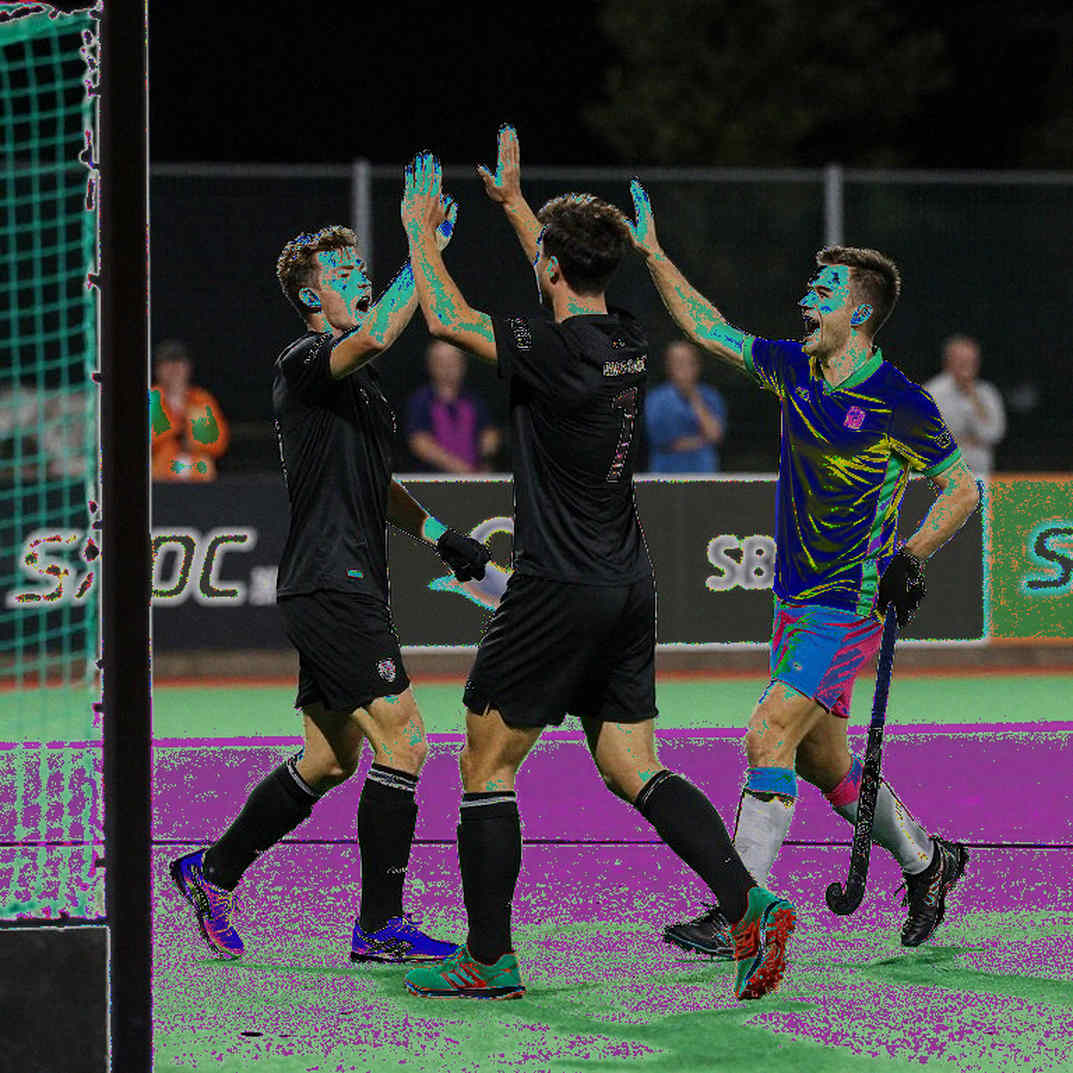
I do not trust heatmaps, because they bury a player's real role in the system. But over zero information there is nothing to trust at all. Between the two extremes sits a place where things can be counted and also explained. In the LC–BC note only one number can be counted, so only one explanation should be offered—modest, honest, small.
This is a closed rivalry between two institutions, with no third party. An open tournament would let us compare several teams; here we cannot. The ordering 'LC–BC' may or may not encode home-venue alternation. Without confirmation, I will not sell it as fact.
Annual institutional fixtures are often anchored to a sports week or a foundation day. The host changes, the date changes, the game does not. The value of such a match lies not in its competitive quality but in its persistence.
Contrarian Angle: The Risk Is Informational, Not Competitive
The biggest risk here is not any team's win or loss. The biggest risk is informational. And the most dangerous habit is reading a promotional note as analysis—hunting for competitive weight where the text says 'an unforgettable battle.'
Every word of a promotional note pushes toward anticipation. When I read the word 'battle,' I ask: a battle over what, against whom, under which conditions? Silence answers. That silence is my actual data point.
The sport-identity ambiguity is the second risk. Proceed on field hockey and one framework applies; if it is ice hockey, that framework is simply wrong. A single mistaken assumption about terminology can invalidate the whole analysis. Before installing any framework, the institution's identity must be confirmed.
The third risk is source opacity. No named author, no named outlet, and the framing is likely partial toward the host institution. I will not put my weight on a structure I have not verified.
One large structural headwind deserves naming, because it is grassroots hockey's real competition. At school and college level, hockey's main rival is not another hockey team. The rivals are cricket, and football globally. Resources, grounds, time and coaches are contested with those sports, and hockey usually loses that contest.
Tahir Zaman's cost figures return here. A stick at three hundred dollars, a goalkeeper's kit at five thousand—against those numbers a school's annual sports budget looks small. An institution carrying that cost for twenty years deserves credit that never shows on a scoreboard; it shows in a budget ledger.
I always call the transfer market a ledger of intentions, not a leaderboard of truths. But at this level there are no transfers and no contracts, so truth can be sought in only one place—participation. How many play, how long they keep playing, how many rise upward. Those three are what matter here.
The contrarian point is this: when we write about small institutional fixtures, we instinctively reach for predictions—who wins, by how many. Yet here the result carries no predictive weight, because a single promotional preview holds no reliable signal. What exists is the continuity of participation.
Takeaway: What to Watch Next Edition
Looking forward, the first item on my list is the announcement of the twenty-first edition. If it comes, continuity has held. If it does not, we must learn why the fixture stopped—budget, or a shortage of players. Either answer is information, and the information is what matters.
The second item is names. If a single player's name surfaces, if we learn who coaches, who captains, who moved up to which division, the whole narrative puts its feet on the ground. Without names this is an institution; with names it becomes a pipeline.
The third item is the return of basic facts: date, venue, surface, sport. With those four in hand I can fill the conditions paragraph and read environment as a tactical input. Without them, today's analysis stays stuck at the skeleton.
So what is the real significance of this match? For me the answer is plain—it is not a forecast of any tactical contest; it is evidence that an institutional hockey culture is still alive. That evidence is small, but it is not zero. And the gap between zero and small is the entire ledger of grassroots sport.
In the silence between whistles, the pattern either holds or confesses. This promotional note has no whistle; it has only silence. As long as the silence lasts, my chart book stays open.